I
was born in
The first settler of
The past and present combine to inspire writers such as myself. I've had to do lots of different kinds of writing to make a living, including nearly 50 computer and general nonfiction books.
A lot of writers have influenced me over the years, both those I met in person and those I've only read about. When I was young, Hemingway was one of my big role models. In my own humble way, I tried to do the things he did because I thought it would help me become a better writer.
Hemingway may have gone up to
When I was released from high school, I decided to do something
frivolous, something fun, something just for me. I
enrolled at
''She edged up next to me underneath the light and crushed out her cigarette on the floor. There seemed to be smoke or dust wafting in the dim orange glow. The room was a mass of debris, parts of car bodies, cans of blood-red motor oil. Joyce's eyes were very round and heavily painted violet. She was uneasy because of the dark room and the fact that we were alone in it. The smell was hot and rubbery. As a salesman I was worried about the smell.''
You can tell I was still very much under the spell of my
idol, Hemingway. But after a year of this, I decided I had to do the right
thing, the responsible thing. I had to get a college degree. I enrolled in the
Did I write my own stories? Did I write about the
''Caught in a money crunch and
lacking the status of traditional programs, two units serving women at the
Between summers, I followed in the footsteps of Hemingway by
going to
When I was released from college I decided to do something for
me, something just for fun—I wrote a column for my local weekly newspaper
called ''So It Goes.'' I had my photo over my column just like another one of
my idols, the columnist Mike Royko. See the resemblance?
(I should note that the first winner of Mike Royko's
annual Ribfest was an
Anyway, back to my column, shortly after it began appearing
in the late 70s, I was surprised when the editor received a letter with the return
address of the federal prison in
''It was with great interest that I read Greg Holden's new
column ''So It Goes'' in your paper the other day. I, in fact, wrote a column
for a local paper in downstate
My editor pointed out that this worthy man didn't actually
own the phrase ''So It Goes,'' and, to be a little more precise, the original
inspiration was that of Kurt Vonnegut. So the title remained atop my
explorations of the political intrigues, the societal tensions, and the
criminal underworld of this seemingly sleepy suburban town. I liked to think
that I had the unwavering, incisive eye of a Nelson Algren.
It was heaven. Each week, I could write about anything I
wanted. I wrote a column about my hometown,
''It was the End of the World. It
had been snowing, on and off, since New Year's Eve. Even now, in late February,
it showed no signs of letting up. Where once had been the thriving town of
ReporterThe columns were fun, but they only paid $5 each. I had to
do the responsible thing. Hemingway, after all, had started out as a journalist
for the Kansas City Star and the Toronto Star. So I gave up my literary
aspirations. I got a job as a reporter for the other weekly newspaper in town,
the Journal. Hemingway wrote articles about tuna fishing in
I covered city hall; I wrote crime stories; I even did the Police Blotter. Note the use of the highly literary word ''dispatch'' to describe a shooting death in the following true crime story:
Large Rat Shot By Cop
''A 'large rat' that was found on
Every once in a while, literature would rear its ugly head. I would work Shakespeare into a headline:
Deaf Women to Officials: Lend Us Your Ears!
Even this job got to be too much fun, too creative. They
gave me an entire page where I could write and layout my own feature stories.
After I got married, the time came to do the responsible thing. I got a job at
the
Even in the midst of all the promotional rhetoric, I couldn't help writing stories and setting scenes:
''Picture yourself in a first-year Common Core class: ''Self, Culture, and Society,'' taught by Profesor Bertram Cohler. On this morning in Cobb Lecture Hall the room rings with voices and anticipation. A dozen students sit around a large table. The same number sit around the walls of the classroom. There is no ''head of the class,'' no lecrurer's podium. When Mr. Cohler comes in, he sits down at the table with the students. Papers rustle. Books are brought out of brightly colored backpacks. There is no lecture. He simply asks: ''How was Durkheim? What problems did it pose?''
I was at the University of Chicago for 13 years, so I had plenty of time to learn about the many writers who went there or taught there, most notably Saul Bellow, Seymour Hersh, Susan Sontag, and Philip Roth, who, like me, wrote about Cobb Hall in a novel called Letting Go:
''I walked to the University through the crackling weather and the virgin snows, and arrived at Cobb Hall feeling as righteous, as American, as inner-directed as a young Abe Lincoln.''
The students I interviewed and profiled in the university's brochures were all very clever. Some immersed themselves in literature, just as I had always dreamed of doing.
For example, Campbell McGrath was editor of a student-run literary magazine. He talked a mile a minute in a low voice that was somewhere between a whisper and a mutter.
''
Mr. McGrath has gone on to write books of poetry like American Noise and Spring Comes to Chicago and recently won a Guggenheim Fellowship and MacArthur Fellowship.
In 1995, a computer science teacher at the
Even in this technical writing, literary references couldn't
help sneaking in. In my first book, when I was explaining how to format bold
and italic text on Web pages, I used a passage from
''What difference does it make, really, if you use logical or character styles in your Web page? Let's take some text and mark it up both ways (with apologies to Lewis Carroll):
But it isn't old Tweedledum cried, in a greater fury than ever. It's new, I tell you. I bought it yesterday--my nice new rattle!' and his voice rose to a perfect scream.''
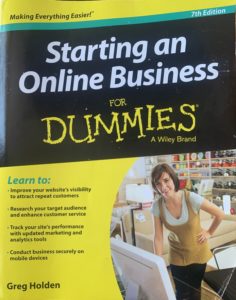
One of my computer books, Starting an Online Business for Dummies, generated enough income in royalties that I could take a few months off. Finally, I got the chance to do something fun, something just for me--to immerse myself in literature and writing, to join practical advice with historical research, just like I had always wanted to do.
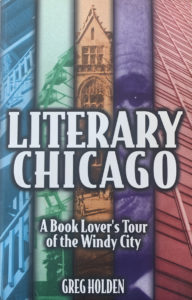
In the year 2000, I was able to write Literary
When I began working on that book I wrote the
There were the two sisters who owned the city's most famous
house of ill repute and who, in their spare time, scoured the city looking for
rare books to add to their collection, which they took to
The columnist Eugene Field, who died of overwork and anxiety
while rehabbing his dream house just outside the city limits; young woman named
Margaret Anderson who edited the Little Review, and who pitched a tent on the
She furnished her tent with carpeting and a piano. She used to be visited there by writers like Sherwood Anderson and Ben Hecht; the mystery writer Eugene Izzi, who was found hanging outside the window of his downtown office wearing a bulletproof vest and with $481 and a pair of brass knuckles in his pocket.
The fact is that, as I've discovered through my journeys
through various types of literary endeavors, if you are a writer,
Why hasn't there ever been a guidebook to
<blockquote>''
That's why I, the author of Starting an Online Business for Dummies and
the University of Chicago brochures and police blotter stories and columns, not
to mention being a father of two young girls, can write Literary Chicago and still feel like I have a foot in the real
world and can go on to write still more kinds of things, like novels, that are
just waiting to come out. I feel like I'm finally doing what I really want to
do.
Early in 2009, I was hired by the
Jane Addams College of Social Work at the